What it is
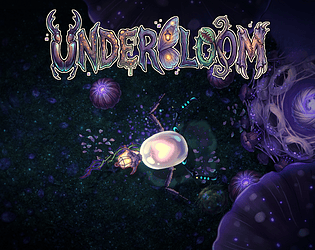
Underbloom is a top-down survival RPG where you play as a Glim, a small jelly creature in a bioluminescent jungle. The core loop involves raiding monster nests, destroying their hearts, and surviving waves of guards.
From the developer
In the developer’s own words, from motawe3.itch.io.
Raid monster nests, steal their body parts, become something new.
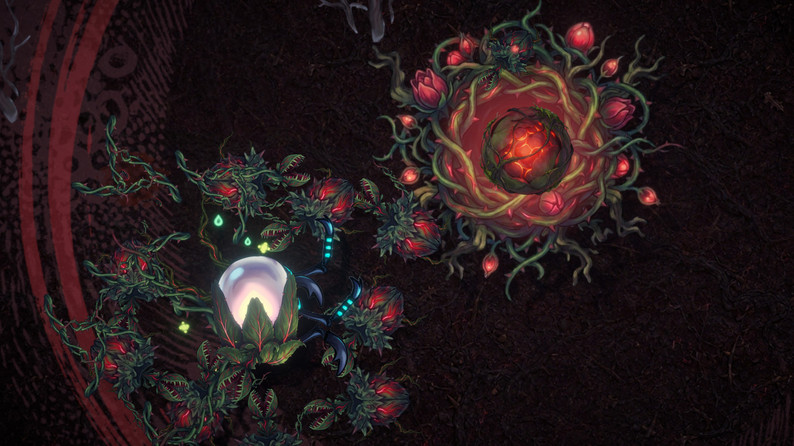
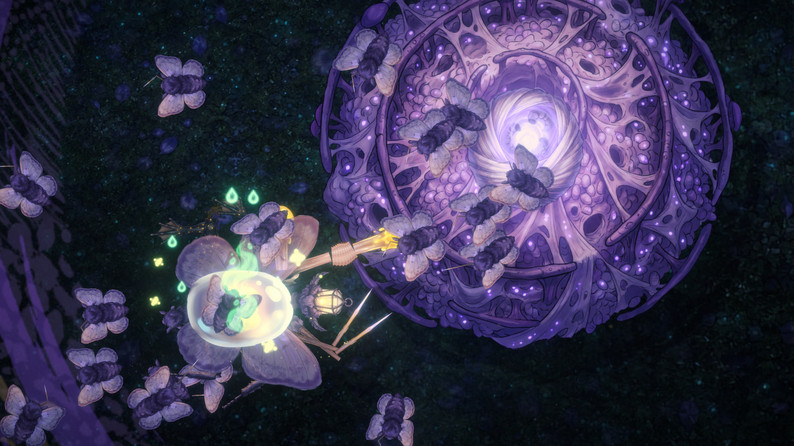
You are a Glim: a small, hungry jelly with a glowing heart, alone in a bioluminescent sinkhole jungle. Find and step inside a nest's ring, and it wakes, sending wave after wave of guards until you destroy its heart.
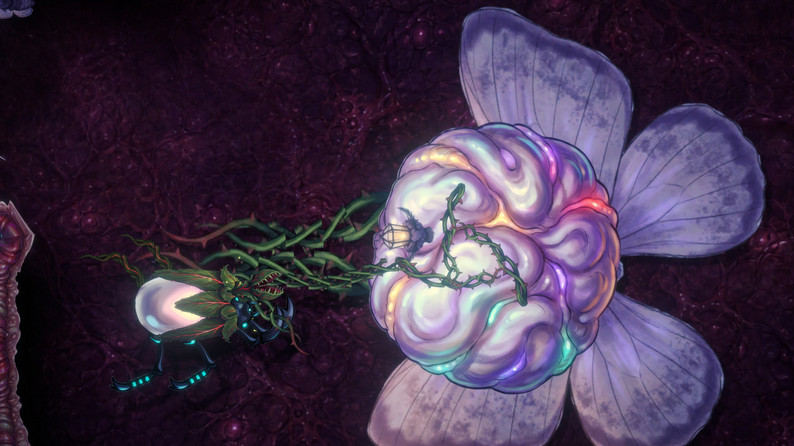
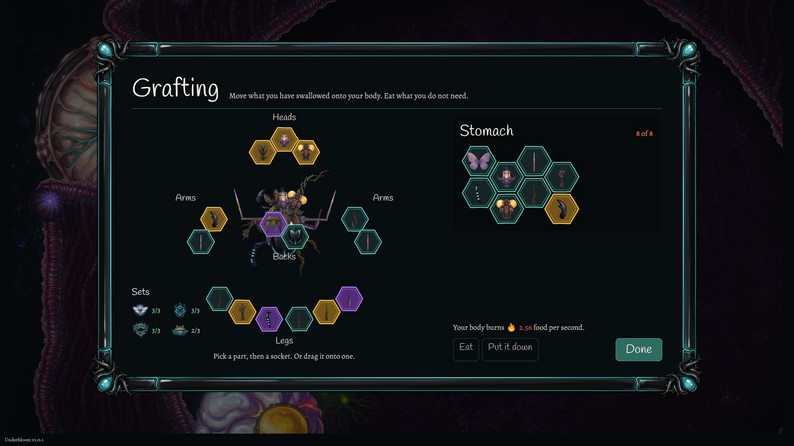
Every guard is built from body parts, and the parts it fights with are the parts it drops. Tear off a beetle's legs, a toad's spitting head, a moth's lantern or a flytrap's jaws, then graft them onto your own body . Each one shows on the Glim and moves with it: legs give you speed and an ability, arms are weapons that strike on their own, heads and backs add health, reach and passives.
Read more
Every part also makes you hungrier. Eat, raid, or starve. Grow enough and you molt into a bigger body with a new body socket and a bigger stomach. Destroy enough nests and the Hollow opens, where the Brood Queen waits.
Every run ends with a specimen card of the creature you became. Save it and share it in the comments or with your friends!
How to play
Move: WASD / arrow keys. The Glim faces the cursor.
Leg ability: Space, or 1–4 for any leg ability.
Graft screen (pauses): Tab or G. Drag parts onto the glim or from it.
Zoom: mouse wheel or = / −. Photo mode: F9. Pause: Esc or P.
Arms attack on their own: your job is where to stand, when to use your legs, and when to run.
Browser notes
Made for desktop browsers (Chrome, Edge, Firefox) with keyboard and mouse or a gamepad (Gamepad is Beta). Phones are not supported.
First load is about 54 MB.
Click the game once to start the sound. Use the fullscreen button for the best view.
If it runs slowly, set Settings › Quality to Low.
Settings and your best run are saved in this browser.
How DreamLayer was used
Every creature in Underbloom is a puppet made of separate body parts that a procedural rig moves: legs plant their feet with IK, arms swing from the shoulder, the body sways and leans. The enemies, their elites, and the Brood Queen are built from the same parts you steal. That design needs one thing from an image generator above all: a consistent set of parts for each species, drawn from above, that join into one animal. DreamLayer's character consistency is what made that work.
Reference first. We started from one style frame Mohammed created as the art direction: a lineup of the Glim and the four species. For each species, DreamLayer edited that lineup into a single clean reference: one creature alone, seen from straight above, every limb separated from the body. Only after the reference was approved did anything else get made, and everything else was an edit of it:
the elite, the small wildlife critter, and the projectile, as edits of the species reference;
the nests as a chain of edits: the small Clutch from the reference, the Colony from the Clutch, the Hive and the razed Husk from the Colony, so all tiers share one footprint;
the adaptation bodies as edits of the approved body (Wary, then Hardened from Wary), so the outline and the sockets stay where the rig expects them.
No generated parts. Body, head, legs, arms and back were cut out of the approved reference, not generated one by one. For the Thornmaw we asked DreamLayer to draw the plant as a parts layout, so every piece could be lifted out with one background removal and plain crops, keeping DreamLayer's pixels.
The rig brings them to life. Unity's procedural rig turns those still images into walking, striking, flinching creatures without a single animation frame. When you graft a Thornmaw's jaws onto your Glim, it is the same image the Thornmaw was wearing.
What DreamLayer made in this build
The Glim , the play
Editor takes
“The bioluminescent sinkhole palette and the way every stolen leg, jaw, and lantern visibly grafts onto your jelly with procedural animation is a real treat for the eyes, but with AI-assisted graphics and sound I can't tell how much of that visual identity is genuinely…”
“Underbloom reads like a quiet body-horror fable — a hungry little jelly molting with every stolen part in a glowing sinkhole — but at about half an hour a run, the atmosphere does most of the storytelling.”
How to play
Defeated guards drop the body parts they fight with. Players can graft these parts (legs, arms, heads, backs) onto their own body. These parts visibly change the character and provide distinct benefits, such as speed, autonomous attacks, health, and reach. However, each part increases hunger, forcing a balance between raiding, eating, and starving. Growth is tied to molting into larger bodies, which unlocks new sockets and a larger stomach. Destroying enough nests opens the Hollow, leading to a final encounter with the Brood Queen. Each run concludes with a specimen card of the creature you bu
Tips
- The game was created for the DreamLayer Jam, where it placed 1st out of 63 entries.
- It is designed for desktop browsers (keyboard/mouse or beta gamepad support).
- Developed with AI assistance across code, graphics, sounds, and text.
Questions
What is the game about?
Underbloom is a top-down survival RPG where you play as a Glim, a small jelly creature in a bioluminescent jungle. The core loop involves raiding monster nests, destroying their hearts, and surviving waves of guards.
How do I get new body parts?
Defeated guards drop the body parts they fight with. Players can graft these parts (legs, arms, heads, backs) onto their own body. These parts visibly change the character and provide distinct benefits, such as speed, autonomous attacks, health, and reach.
What is the hunger mechanic?
Each grafted part increases hunger, forcing a balance between raiding, eating, and starving.
What happens when I grow?
Growth is tied to molting into larger bodies, which unlocks new sockets and a larger stomach.
How do I win?
Destroying enough nests opens the Hollow, leading to a final encounter with the Brood Queen.
What happens at the end of a run?
Each run concludes with a specimen card of the creature you built.
Comments 0
Log in to comment
No comments yet. Share a tip, a bug or your best moment.